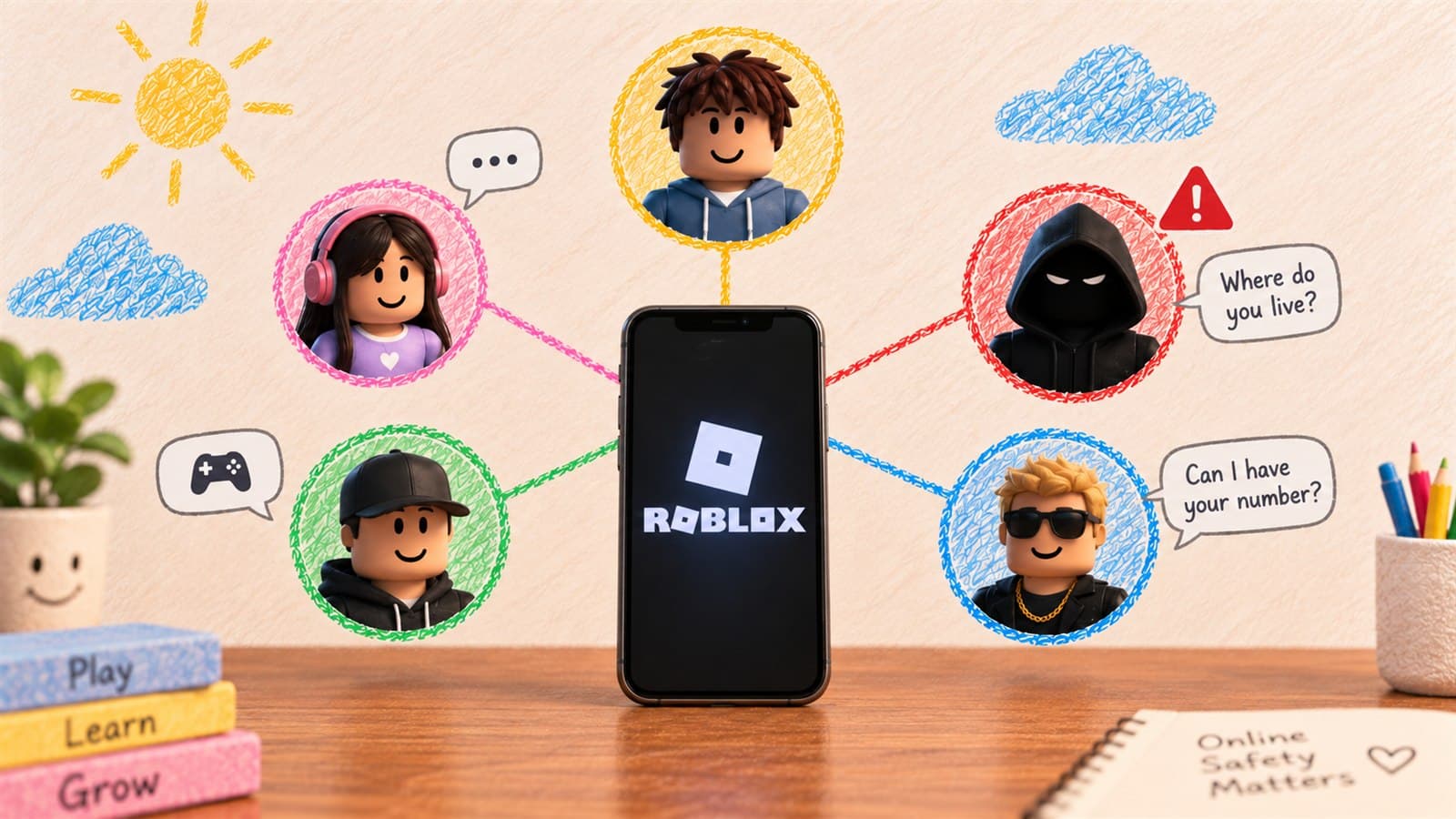
Ask most Indian parents what Roblox is, and the answer is usually some version of: isn't it just a game? A tech executive we spoke to described his son becoming so absorbed in building his Roblox avatar that he stopped wanting real gifts entirely. He wanted in-game currency instead. A major sportswear brand sent merchandise. The child, genuinely unmoved, said he'd rather have Roblox credits.
We heard a similar story from a mother whose child asked for 500 rupees not to spend on anything tangible, but for Roblox credits. She had no idea what Roblox even was.
Both stories are about the same thing: a child who had developed a relationship with a virtual world that the parents around them had not looked inside. Roblox is not a game. Understanding what it actually is, and what it makes possible, is where any sensible conversation about whether your child should be on it has to start.
What Roblox Actually Is
Roblox is a platform, not a game. It contains millions of individual games, all created by other users, ranging from obstacle courses and role-playing simulations to virtual shopping malls and social hangout spaces. Children do not just play on Roblox: they build, socialise, trade, chat, and spend. The average Roblox user spends significantly more time on the platform than on a conventional game, partly because there is always something new to explore and partly because the social dimension keeps pulling them back.
The platform has over 80 million daily active users globally. In India, the number of Roblox players has grown sharply since 2020, accelerated by the pandemic years when children were home with devices and limited alternatives. The demographic is primarily 9 to 14, though younger and older users are common.
The currency system, Robux, is real money. Children can earn it through game creation but overwhelmingly acquire it through parental purchases. Robux buys in-game items, character accessories, avatar upgrades, and access to premium game areas. This is not incidental to the platform's appeal. The avatar and its presentation are a significant part of how children experience identity and status on Roblox, which is why a child can genuinely prefer virtual clothing to physical gifts.
The Three Risks That Are Worth Understanding
Stranger contact.
Roblox has chat functionality built into most games. Children interact verbally and through text with other players in real time, and the default settings allow contact from any user, including adults. Nirali Bhatia, a cyber psychologist and founder of CyberBAAP, a not-for-profit working in anti-cyberbullying, explains why children are particularly vulnerable to this kind of contact:
On Roblox, a child playing a role-playing game is in character, relaxed, absorbed, and often chatting with people they have never met. The psychological guards that might operate in a different context are at their lowest. Nirali's term for this is the online disinhibition effect: the loosening of the boundaries that normally regulate what we share and with whom. Children's guards are lower than adults' in this state, and bad actors understand this.
Identity absorption.
The avatar system on Roblox is designed to be a persistent, customisable identity. Children invest time, money, and emotional energy in building and maintaining their avatar. For some, the avatar becomes, as Nirali describes it, an extended identity. Nirali's research into online identity formation has found that sustained investment in an online persona can create what she calls a confused identity in the real world: the child oscillates between who they are online and who they are offline, and the gap between the two becomes a source of difficulty.
In the context of Roblox specifically, a child who has spent months building an avatar and a social life around it may find the prospect of restriction or removal of access genuinely distressing, in a way that feels disproportionate to a parent who does not understand how much of the child's identity has migrated into that space.
The stopping mechanism is missing.
Nirali's description of why gaming is so difficult to stop is directly applicable to Roblox. Physical fatigue, when you are sweating or your legs hurt, is easy to identify. Mental fatigue sets in later and is far less identifiable. A child on Roblox starts getting irritable and cannot focus, but they do not register tiredness, so they do not stop. The platform is designed to keep presenting new stimuli: a new game, a social notification, a limited-time item in the shop. There is always a reason to stay.
The Parental Controls That Exist and How to Use Them
Roblox has a parental controls section that most parents have never opened. It is accessed through the Roblox website rather than the app, via the account settings of the parent or the child's account. Here is what is available and what each setting does.
One note on the limits of these controls: Nirali's experience working with children and platforms has taught her that settings are a foundation, not a solution. A child who is motivated to get around a restriction usually can. The relationship and the conversation are what hold when the technical controls run out.
The Conversation to Have Before They Play
Nirali's framework for introducing any digital platform to a child applies directly here. Her starting point is that curiosity left unaddressed will find its own answers, and those answers tend to come with other people's biases and experiences built in. The parent who gets there first shapes the context.
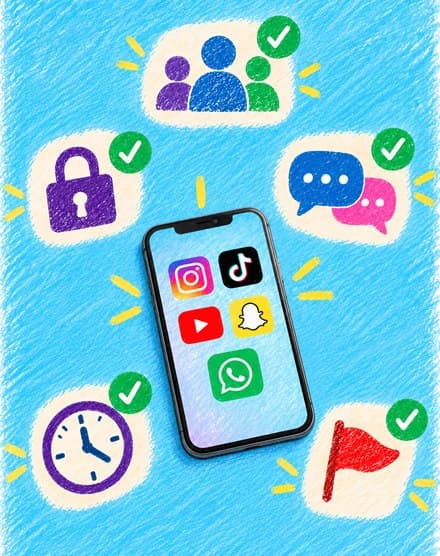
Applied to Roblox, this means: before your child plays, sit with them for the first session. Find out what they want to do on it. Ask which games their friends are playing. Look at the privacy settings together and explain what each one means. Nirali's three non-negotiables for any platform are worth building into this conversation explicitly:
Nirali's closing principle is also the most important one for parents who are anxious about this conversation: the goal is trust, not restriction. A child who knows their parent is an ally in navigating these platforms, rather than an opponent trying to take them away, is the child who will come to that parent when something goes wrong.
So Is It Safe?
Roblox is as safe as the settings you configure and the conversation you have had. With account restrictions enabled, a child under 13 playing games on their friends list, in a household with an agreed time limit, is using a platform that carries manageable risk. Without those configurations, with open chat and no spending controls, it is a different situation entirely.
The more useful question is not whether Roblox is safe in the abstract, but whether you have looked inside it, talked to your child about how it works, and set it up in a way that reflects your family's values. The parents who are most relaxed about Roblox are not the ones who banned it. They are the ones who sat down with their child and played it together, once, and came away with enough understanding to know what to watch for.
Every platform your child uses is a conversation waiting to happen. The ones that go wrong are usually the ones where that conversation never did.
At Cybertot, we are building tools that help parents set up digital boundaries across all platforms, including gaming, with controls that hold consistently rather than requiring manual enforcement every day.