
Artificial intelligence is no longer a distant concept. It's already part of children's everyday digital experiences - from learning tools and search results to games, recommendations, and chat-based platforms.
For children between the ages of eight and fourteen, AI can feel seamless and invisible. It responds quickly, sounds confident and often presents information as fact. While technology brings exciting opportunities to learn and explore, it also introduces risks that many parents are only beginning to understand.
The challenge isn't to fear AI, it's to recognise how it shapes what children see, believe and trust online.
How AI Is Showing Up in Children's Digital Lives
Many children interact with AI without realising it. Recommendations engines decide which videos appear next. AI-generated answers respond to questions instantly. Games and app adapt in real time to keep users engaged.
For young minds, this can feel helpful and intuitive. But it also means children may place a high level of trust in content that hasn't been designed with their age, conte t or emotional development in mind.
When AI Gets Things Wrong
One of the biggest risks with AIo is that it doesn't always get things right, and it doesn't always signal uncertainty.
AI-generated responses can be inaccurate, exaggerated or inappropriate. Content may sound authoritative even when it's misleading, for children who are still developing critical thinking skills, it can be difficult to tell the difference between reliable information and confident-sounding guesses.
This can lead to confusion, fear or the spread of misinformation, especially when children take what they see at face value.
The Risks of Over-Personalisation
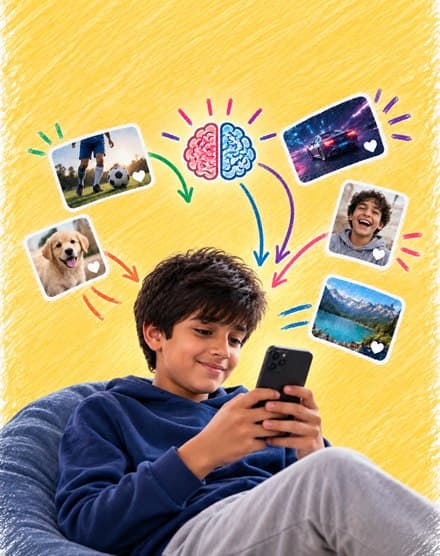
AI systems are designed to learn from behaviour. The more a child watches, searches or clicks, the more content is shaped around those patterns.
While personalisation can feel engaging, it can also narrow perspective. Children may be repeatedly exposed to similar ideas, themes or content without realising it. Over time, this can influence interests, beliefs and even self image-without obvious warning signs.
Emotional And Social Impacts to Watch For
AI-driven platforms don't understand emotion the way humans do. They can surface content that feels overwhelming, unsettling or inappropriate without recognising its impact.
Some children may become overly reliant on AI tools for answers, reassurance or validation. Others may struggle with distinguishing between human interaction and automated responses, especially in chat-based environments.
These shifts are often subtle, but they can affect confidence, judgement and emotional regulation over time.
What Parents Can Do, Without Panic
The goal isn't to ban AI or control every interaction. What helps most is awareness and conversation.
Talking with children about what AI is, in simple, age-appropriate terms, gives them context. Explaining that AI can make mistakes, doesn't always understand nuance, and should replace human judgement helps children pause and question what they see.
Encouraging children to check in when something feels confusing, strange or upsetting keeps the door open without creating fear.
Building AI Awareness as a Life Skill
Understanding AI is quickly becoming a part of digital literacy.
When children learn to question how content is created, why certain information appears, and whether it should be trusted, they build skills that extend far beyond screens. These habits support better decision-making, healthier curiosity and stronger independence.
AI isn't going away. But with the right guidance, children can learn to engage with it thoughtfully, rather than passively.
Finding Balance in an AI-Driven World
AI will continue to shape the digital spaces children grow up in. The role of parents isn't to predict every risk, but to stay informed, attentive and open to learning alongside their child.
When children know they can talk about what they encounter, without fear of overreaction - they're better equipped to navigate the latest technologies with confidence and care.
At Cybertot, we believe that understanding emerging technologies early helps families stay grounded, connected and prepared for what comes next.