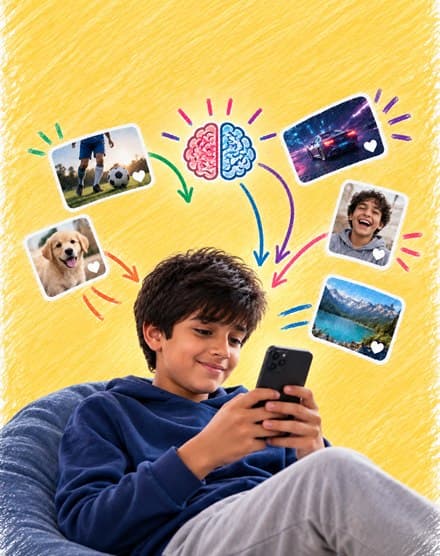
Growing Up in a Rapidly Changing Digital World
The digital world our children are growing up in is changing quickly, often faster than we realise. For children between eight and fourteen in India, the online world is no longer limited to social media, gaming or school apps. It increasingly includes artificial intelligence, AI-generated content and even deepfakes.
Many of these tools can be creative, educational, and genuinely exciting but they also introduce new challenges that most parents did not encounter growing up and still are not fully equipped to understand.
Understanding these emerging digital risks isn't bout fearing technology. It's about helping children stay safe, confident, and discerning as the online world becomes more complex. With the right awareness and conversations early on, families can prepare for what is ahead, without panic and without falling behind.
AI in Kids' Online Spaces
Artificial intelligence is already a part of many children's online experiences - from educational apps to chatbots and virtual assistants. Used well, it can support curiosity and creativity.
But AI-driven platforms don't always understand context, age or intent. They can surface unmoderated content, generate misleading information, or respond in ways that aren't appropriate for children. For children between eight and fourteen, this can be confusing. Critical thinking skills are still developing, and it's not always easy to tell the difference between what's helpful, what's accurate and what shouldn't be taken at face value.
The answer isn't to avoid AI altogether. It's awareness. Talking to children about what AI is, and why not everything it produces should be taken at face value, helps them develop judgement early.
Deepfakes and Manipulated Media
Deepfakes, digitally altered images or videos that look real, are becoming more common. While they're often discussed in the context of celebrities or politics, children can encounter them too.
These images or videos may involve peers, influencers, or complete strangers. When something looks real but isn't, it can cause confusion, embarrassment, or distress, especially for children who are still learning how to interpret what they see online.
What helps most is building awareness early. Reminding children that not everything online is real, and encouraging them to pause, question and check in when something feels unsettling, can make a real difference.
Emerging Gaming and Social Media Threats
Many apps and games children already use are becoming more complex, driven by AI-powered personalisation. Content, recommendations and interactions are increasingly tailored to each child, often designed to keep them engaged for longer. While this can feel fun and immersive, it can also blur boundaries around time spent online and expose children to content that isn't always age-appropriate.
Although some platforms rely on automated moderation, AI isn't perfect. Harmful messages, videos or links can still slip through. What helps is staying aware, talking regularly about online behaviour, and setting clear, healthy boundaries, so children learn not just what's allowed, but why it matters.
Spotting Early Warning Signs
Children don't always talk about what is troubling them online. More often, the signs show up quietly.
You might notice confusion about what's real and what isn't online. Increased secrecy around certain apps or videos or a sudden sense of anxiety after spending time online. Some children may also become unusually absorbed in specific digital trends or AI-generated content.
Changes in mood, sleep or social behaviour can also be clues that something online is affecting them more than expected. These shifts don't always signal a problem, but they can be helpful prompt to pause, check in and start a gentle conversation.
Guiding Children Safely in a High-Tech World
Keeping children safe online isn't about fear or strict policing. It's about guidance and keeping conversations open as technology evolves.
Starting with simple, relatable explanations about AI and deepfakes can help. Talking through how content can be created, edited, or manipulated gives children a framework to understand what they're seeing. Encouraging them to ask questions when something feels confusing helps build awareness and judgement over time.
Exploring apps or platforms together can also shift the dynamic from supervision to shared learning. It allows children to see, in real time, how to navigate digital spaces thoughtfully and safely
When children learn to think critically about what they encounter online, it becomes a skill they carry beyond screen - much like learning about kindness, responsibility, or road safety.
Building Digital Resilience
Digital resilience is about helping children feel confident handling challenges online, not shielding them from every risk.
Encouraging children to pause, question unusable content, and check information before accepting it builds critical thinking over time. Just as important is making space for offline friendships, hobbies, and activities, so screens don't become the only place they feel, capable or validated.
When children understand how digital content is created, shared, and sometimes manipulated, digital literacy becomes a life skill. One that supports independence, good judgment, and safer choices, online and beyond.
Preparing for the Digital Future
The digital world our children are growing up in is changing quickly. Technologies like AI and deepfakes are becoming part of everyday online life, bringing new ways to learn, create, and explore, along with new challenges to understand.
For parents, the goal isn't to keep up with every shift in technology. It's to stay informed, keep conversations open, and help children build the skills they need to navigate the online thoughtfully. Early guidance, empathy, and steady support can turn uncertainty into confidence.
With the right foundation, children learn not just how to stay safe online, but how to think critically, set boundaries and make considered choices. There are skills that shape resilient, aware, and confident digital citizens, today and in the future.