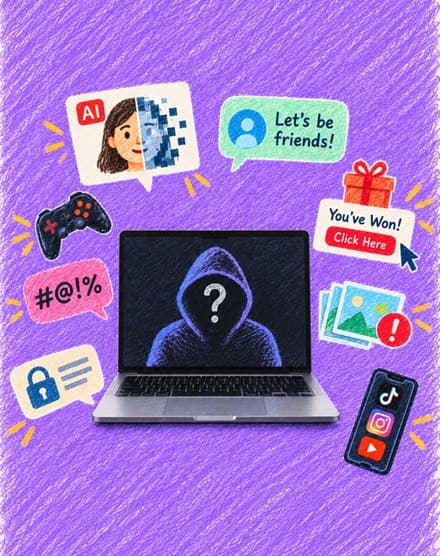
For many parents, scams feel like something that happens to adults, suspicious emails, fake calls or messages that seem easy to spot. But as children spend more time online, scammers are increasingly shifting their focus towards younger users.
For children between eight and fourteen, phishing and online scams don't always look like "danger." They often appear as games, rewards, messages from friends or opportunities that feel exciting and harmless. Understanding how these scams work is the first step in helping children stay safe.
Why Children Are Being Targeted
Children are targeted not because they're careless, but because they're still learning how trust works online.
Scammers know that children are curious, responsive and less likely to question urgency or authority. A message promising free fame rewards, early access to content or help from a "support team" can feel believable - especially when it uses familiar language or platforms children already trust.
How Phishing and Scams Appear in Children's Online Spaces
Phishing aimed at children rarely looks like a traditional scam. It blends easily into the platforms they already use and trust.
It might appear as a message offering free in-game rewards, early access to a feature, or bonus points for clicking a link. Sometimes it looks like a routine request, asking them to log in again, confirm an account or "verify" their details to keep playing.
In other cases, the messages pretends to come from someone familiar: a friend, a classmate, or a platforms support team. The language is casual. The timing feels urgent and the request seems harmless. That combination makes it easy for children to respond before stopping to think.
Because these messages mirror everyday online interactions, children don't always recognise them as risky, especially when excitement or pressure is involved.
The Emotional Impact of Being Scammed
Beyond data or account access, scams can affect children emotionally.
Children may feel embarrassed, scared, or guilty if they realise, they have been tricked. Some hesitate to tell parents because they worry about getting it not trouble or losing decide privileges.
This silence is often what scammers rely on and why open, judgement-free conversations matter.
Simple Signals Children Can Learn to Spot
Rather than teaching children to fear the internet, it helps to give them simple signals to watch for.
Messages that create urgency. Requests for personal information. Offers that sound unusually generous. Links that ask them to sign in again without clear reason.
Encouraging children to pause and check before clicking builds awareness, without creating anxiety.
What Parents Can Do, Practically
Protection works best when it's layered.
Talking opening about scams in everyday language. Encouraging children to check in before clicking unfamiliar links. Using parental tools that flag suspicious messages or links. And reminding children that mistakes can be talked about, not punished.
When children know support comes first, they're more likely to ask for help early.
Building Scam Awareness as a Digital Life Skill
Learning to spot scams is part of growing up online.
When children understand how phishing works, they begin to question messages instead of reacting automatically. This skill doesn't just protect them today - it stays with them as digital spaces becomes more complex.
Awareness, not fear, is what builds long-term safety.
Finding Confidence in a Noisy Digital World
Scams and phishing aren't going away. But with the right guidance, children don't have to face them alone.
At CyberTot, we believe that informed children and supportive parents are the strongest defence against digital manipulation. When families talk openly and stay alert together, children learn to navigate the online world with confidence and caution.