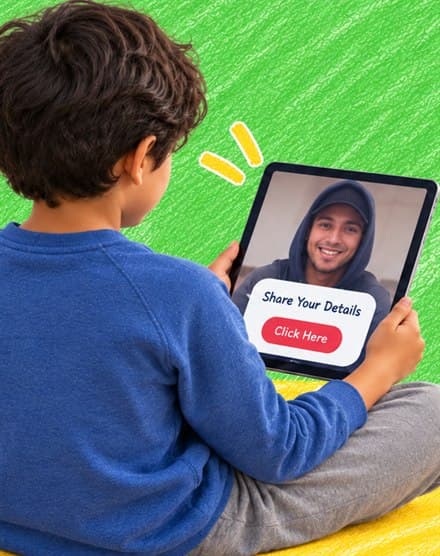

Growing Up Online in India Today
For children in India today, the internet is just a tool.
It's where they learn to play, socialise and express themselves.
From online games and YouTube to school WhatsApp groups and early social media exposure, children between eight and fourteen are growing up in a world that's always connected and often unsupervised.
That constant connection brings opportunity.
It also brings new risks that many of us, as parents, didn't grow up with.
Cyberbullying, inappropriate messages and harmful interactions don't always look obvious at first. According to a UNICEF India study, nearly one in three children has experienced some form of online harassment. What's more concerning is that many parents only become aware once a child's behaviour, confidence or emotional wellbeing has already been affected.
This leaves many parents with a difficult question: what's really happening inside gaming chats, group messages and DMs, and how do you stay involved without overstepping or disconnecting your child from their digital world?
The Many Faces of Cyberbullying
When we think of cyberbullying, most of us picture obvious cruelty - name-calling, mean comments or public insults. But for many children today, it shows up in quieter, more subtle ways.
It can be the group chat that suddenly goes silent. A message that gets shared without context or consent. A screenshot that's passed around before anyone pauses to think about the impact. Sometimes, it's someone pretending to be your child online saying things they never would.
For children between eight and fourteen, moments like these can hit hard. This is an age when friendships matter deeply and belonging feels fragile. Something that seems trivial to us can linger long after the screen is put away.
What makes this especially difficult is that many children don't talk about it right away. Not because they don't trust us but because they're afraid of how it will be received and the consequences thereafter.
Gaming Chats, The New Playground Parents Don't Always See
If your child spends time on multiplayer or online games, chances are they're chatting while they play. For kids, this is part of the experience. It's how they learn teamwork, joke around and feel connected within the game.
What's easy to miss is how quickly these chat spaces can shift. Behind a friendly username could be another child or someone older. A comment meant as a joke can turn hurtful. A casual conversation can slowly cross into uncomfortable territory.
Our instinctive reaction, often, is to ban the gaming altogether, a very natural response when fear sets in. But unfortunately, that only kicks the can down the road rather than resolving it.
What tends to help is staying involved in small yet consistent ways. Showing interest in the games they enjoy, asking about their teammates and looking through their privacy settings together and agreeing on what makes both of you comfortable.
Over time, this kind of involvement helps children see parents as allies in their digital world and not gatekeepers standing on the outside.
Social Media Pressure Starts Early
Even though most social media platforms have a minimum age requirement, many tweens find their way in earlier than expected, sometimes through shared family devices and a lot of times through accounts of their own.
At this age, self-esteem is still taking shape. Likes, followers and comments can begin to carry more weight than parents realise. Children may start comparing themselves to influencers or classmates who appear to have effortlessly "perfect" lives online. Over time, that comparison can quietly erode confidence even if nothing seems obviously wrong on the surface.
What often helps is keeping the conversation open and grounded. Talking about what's real and what's curated for the online world. Acknowledging that many images and videos are filtered, staged or edited and that they rarely tell the story.
Small consistent habits can help restore balance, phone free meals, screen free time on the weekends. Gentle reminders that connection, fun and validation aren't restricted to the online world, and that the offline world matters just as much.
How To Spot The Signs
Children rarely outright say that something is wrong online. More often, the clues show up quietly, a sudden need for privacy around their phone, messages being deleted, pulling away from conversations or seeming unsettled after spending time online.
If you notice these shifts, how you respond matters. Approaching with curiosity rather than concern or frustration can make a real difference. A gentle observation like "You seem a bit quiet after being online lately - do you want to talk about it?" can open the door without pressure.
It's these small, open-ended moments that invite honesty. Far more than warnings or reactions driven by fear, it's these kinds of conversations that signal to a child that the environment is a safe space to talk even when the conversation seems hard.
Why Open Communication Matters
More than any app or setting, open communication is what protects children the most. Making space for regular, low pressure conversations about their online world can go a long way, what they like (or not), what their friends are sharing online and even the newest trends that they find fun.
When children feel heard rather than managed, they're far more likely to speak up when something doesn't feel right. Sharing your experiences helps too - the positives and the mistakes. It helps the child understand that digital challenges are a part of everyone's life and they can be navigated together.
Creating a Digital Safety Routine at Home
Online safety doesn't have to feel complicated. Often, it's small consistent habits at home that make the biggest difference.
Keeping devices in shared spaces can make online activity feel more open and less isolating. Setting a few screen free moments in the day, during meals or before bedtime, creates natural pauses. Also, talking about online behaviour the same way you talk about kindness or honesty helps children understand that their digital life and their offline life share a lot of the same values.
Some families also choose to use parental tools that offer gentle visibility - alerts for new contacts, limits on harmful content or protections against suspicious links. Used thoughtfully, these tools aren't about control, they're about shared awareness supporting good judgements and building digital responsibility together over time.
What to Do If Something Goes Wrong
If your child experiences bullying or harassment online, the most important thing in that moment is how they feel supported. Staying calm and letting them know it isn't their fault can help ease the fear or shame they may be carrying. Remind them that you'll work through it together.
It helps to pause before taking action. Saving screenshots, messages or usernames gives you clarity later even if emotions are running high in the moment. Most platforms offer reporting tools and if the situation involves classmates, schools often step in.
If a child feels deeply distressed or unsafe, additional support is available. Childline 1098 is a national 24X7 helpline for children in distress. Let your child know that reaching out for help, whether to you or to someone else, is a sign of strength not something to be ashamed of.
Raising Resilient Digital Citizens
The goal isn't to keep children away from the internet, it's to prepare them for it.
When children understand what feels safe, what deserves caution and when it's important to speak up they're better equipped to navigate the digital world with the confidence and values of the offline world.
At Cybertot, we believe raising digital citizens is really about raising thoughtful, aware and empathetic children. Children who know how to be kind, set boundaries and look after themselves, online and off.